Boomerang by Chanel Sport, 2007
Object Design is the advance consideration of the function and form of three dimentional artefacts. The term "object" is different from "product" which normally means something mass produced for sale. "Object Design" is a wider more general term that includes prototypes or art works and a full range of original, singular design items.
Object Design has a flexibility usability tradeoff. The more flexible a design, the more limited each of its uses. A common design mistake is to make something more flexible. Personal computers are a great example of multi-purpose devices in which the designer cannot predict how much aspects will be used. The more people use products the more they become familiar with uses and eventually some aspects are emphasized, resulting in specialization such as the i-pod.
The Swiss Army Knife, originated in 1897, gives flexibility but the actual use of each tool is limited, even less useable as the tool increases in flexibility.
Mimicry is copying aspects from nature or existing objects to increase usability and likeability. Surface mimicry concerns patterns and appearances. Behavioral mimicry is designing an object to act like something, such as a robotic dog or crying doll, normally toys because it cannot replace the original function. Functional mimicry is when something looks and functions like the other such as a telephone/calculator keypad.
This toy truck demonstrates behavioral mimicry but not functional mimicry because it cannot perform the same way as one of real scale.
Prototyping is a process for all aspects of design. Concept prototyping is common for large or projected designs such as cars. Throwaway prototyping is simply a model. Evolutionary prototyping is common to software and technology where there are new generations without a final product.
Stylists are essential to the presentation of a finished object. Stylists work as mediators between product designers and photographers or advertising agencies. A stylist may work with one designer to give a clean studio feel to a product. Or a stylist may work with many products to create an overall look. Victoria Granoff is a well known food stylist for Vogue and other publications.

John Heskett describes that in object design the general emphasis is designers giving “too much meaning” to products. This follows the trend of decreased use value increased mythical vale that we learned about with Marx and Guy Debord’s Society of the Spectacle. In product design, Philippe Starck is well known for inventive "artistic" objects. He created the useless “Juicy Salif” in 1990. MOMA acquired it and it has been gold plated.
However an innovative aesthetic can transform an object forever. The new Dyson fan released in 2009 is a bladeless version that replaces the noisy clutter of the bladed version that has been in use over 100 years.
Porsche was an engineer who created the Volkswagon Beetle and Porsche and other items with his grandson Ferdinand following in influential design. The luxury 1950’s Porsche distinguished itself from the Beetle with a more streamline design. Below 1957 & 1954.
It was Giorgetto Giugiaro that revolutionized cars with the hatchback concept in 1974 for Volkswagen and then in 1978, the Megagamma minivan for Lancia.
Many recent concept cars suggest different directions for car design. The Mercedes F-Cell Roadster, 2009, returns to the original Mercedes buggy format but is solar and electricity powered.
Jinyoung Jo, a talented car designer at Hong-ik University in South Korea created the Chanel Fiole concept.
The GM Car Hero was the winner for the 2009 Car Design Challenge projected for 2030. It would be an automated vehicle that allows drivers/rider to play video games.
Dieter Rams is famous for his object design for Braun. He believed products should provide quiet efficient service that emphasize a black and white color palette, well known for audio equipment which directly influenced the iPod.
Jonathan Ive designed the colorful iMacs in 1998. The Powerbook G4 was first introduced in 2001.
IDEO is an important product design consultancy. It was founded in the 1990’s as a global design initiative in London, San Fran, Palo Alto, Chicago, Boston, Tokyo. It functions as a consultancy to allows products extended prototyping and market testing as well as re-design. The emphasis is on problem solving.
The approach to designing small objects if different than for large systems. While tacit knowledge, what is learned through time and practice, helps small design, large scale design is supported by engineering and other concrete knowledge. The Aeron chair for Herman Miller required knowledge of the human body form to work properly.
Mies Van De Rohe, Barcelona Chair, 1929
Dali, 1938
Eero Aarnio, Ball Chair, 1966, and Bubble Chair, 1968 produced through Adelta and Vitra
The creation of the first chair from one sheet of plastic was revolutionary. Read the monobloc plastic chair story.
Vico Magistretti, "Selene" chair by produced in 1969, the first one-piece plastic chair and Verner Panton, Panton S Chair, 1973, produced through Vitra

Louis XVI Chair 1770's and Philippe Starck Louis Ghost Chair, 2008 produced by Kartell
Droog Group, Dutch Designer Juergen Bey’s Tree Trunk bench, 2000
Sometimes design is fulfilling consumer dreams/demands as in the Kohler overflow bathtub for the fullest experience. Products can also be part of accidents, consumers making new use of them or new chance materials like the glue on the 3M post-its. Ikea showed that consumers were willing to build. Technology is a challenge for designer because it is always changing. Accessibility to object design is important and poor consideration of those with disabilities can block products from release. Adaptability is key for the future with increases in smart chips/products and customization for users.
Fashion designers can also extend into object design through innovative accessories. For Fall 2009 Chanel debuted a new line of luxurious mink-covered scooter helmets with built-in iPod capability. The over-the-top accessories were created in collaboration with French luxury helmet maker les Atleiers Ruby & Apple. The are road legal with carbon fiber shells and lambskin lining with iPod connection.


Some iconic object designs include the Sony Walkman which emerged into dominance in the late 1970's through the 1980's. The device, which grew increasingly smaller, gave personalized portable music to the masses. See the award winning commercial campaign.
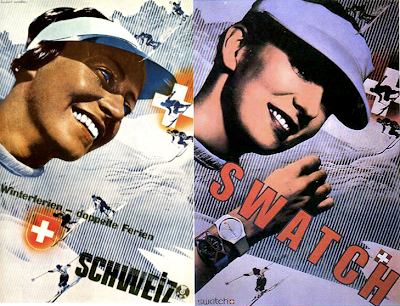
Swatch is another iconic object design. It was based on the "second watch" idea of offering something affordable and durable for everyday use. It also used it's Swiss heritage to give it global appeal. It began very simple and in time grew in variety of color and style.
An original Swiss ski campaign and the Swatch revision
Sneaker design is one example of an object revolution in the 20th century. From Converse to Nike and the diversification of the 1990's, sneakers have become product, fashion and status.
Converse was first produced in 1917 and popularized by basketball player Chuck Taylor.
Puma and Adidas were started by the Dassler brothers who were divided over Hitler during World War II. Read the full story here.
In 1985, Air Jordans transformed Nike from running shoe to superstar basketball shoe, which then entered into fashion and hip hop culture. There have been 23 official versions of the Air Jordan with many other adaptations. Visit the site.
Artist Ken Courtney immortalized Air Jordans in gold for his project Indulgences, 2008.
ALife is a shoe store in the lower east side of Manhattan that specializes in luxury sneakers.